Motor Skills in Early Childhood
A motor skill is the ability to move muscles to perform a certain act. They are divided into 'gross' and 'fine'. Gross motor skills involve large muscle activities, such as walking, throwing, and swimming. Fine motor skills involve finely-tuned movements, such as finger dexterity for writing or using a keyboard.
Let's have a look at the development of these skills in infants:
At 0-3 months a baby can
- jump at loud noises, raise head when lying on stomach
- smile back when when smiled at, watch hands move, hold a rattle
At 6-9 months
- sit up, stand up whilst holding someone's hands, crawl
- eat using hands, play with hands and feet
AT 9-12 months
- crawl, climb, 'cruise' [move about while holding on to supporting objects], take 'baby steps'
- handle small objects, pull string, start drinking from a plastic cup
Then...
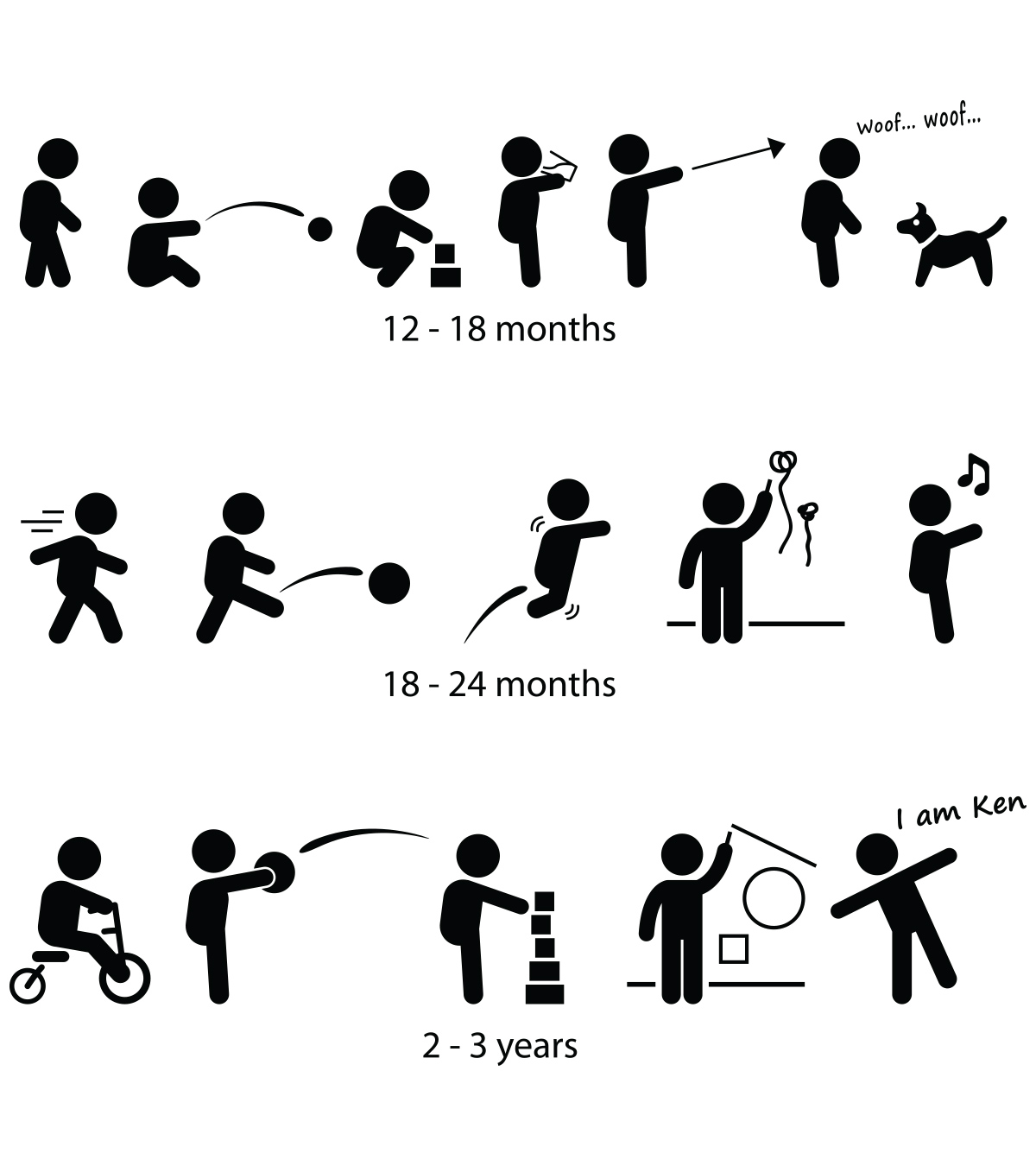
Gross motor development in young children
- At around three to four years old, a child can usually: throw a small ball underarm; catch a large ball; jump on two feet
- At four to five years old: bounce and catch a ball; run three meters and stop; kick a ball towards a target; bounce a ball under control; hop on one foot
Fine motor development in young children
- At around three to four years old, a child can usually: approximate a circle when drawing; cut paper; build an eight-block tower; dress and undress a doll; pour water from a jug
- At four to five years old: tie shoelaces; cut following a line; copy figure 'x'; open and place clothespins; build a five-block bridge; print first name